
If you’ve been an SLP for more than five minutes, you’ve probably created—or searched for—an articulation word list.
And honestly? At this point, word lists are everywhere.
AI tools can generate 50 articulation words in seconds (albeit not always the correct sounds…), and blog post after blog post offers massive articulation lists for every sound imaginable. Even here at Speech Therapy Store, we’ve been creating articulation word lists for years—we have an entire articulation library covering initial, medial, and final sounds.
Finding your target sound has never been easier.
So why does articulation therapy still sometimes feel time-consuming, disjointed, repetitive, and hard to generalize?
Because the articulation word list was never the hard part. The real challenge has always been what comes after the list.
That’s what we wanted to dig into in this blog post.
An effective articulation session isn’t built by handing a student a list of words and hoping practice turns into carryover. Real progress requires movement—from sound to word, from word to phrase, from phrase to sentence, and eventually into real-life conversation.
To get there, articulation therapy needs more than words. It needs:
- clear visual supports
- a predictable session format
- intentional progression through practice levels
- and screen-ready, digital articulation materials that work across settings
In other words, it needs a system.
This post walks through the shift SLPs need to make—from treating the word list as the therapy to using it as the starting point for session-ready articulation. Because carryover doesn’t happen by accident. It happens when therapy is designed to move students all the way from the word list to confident, conversational use of their target sound.
Before We Dive In: Using R Blends as the Example
Throughout this post, we’re using initial R blends as our working example—and that’s intentional.
R blends are a target where word lists are easy to find, but progress is harder to maintain. Carryover often looks solid at the word level and then breaks down as students move into phrases, sentences, and conversation.
That’s exactly why they’re a great example.
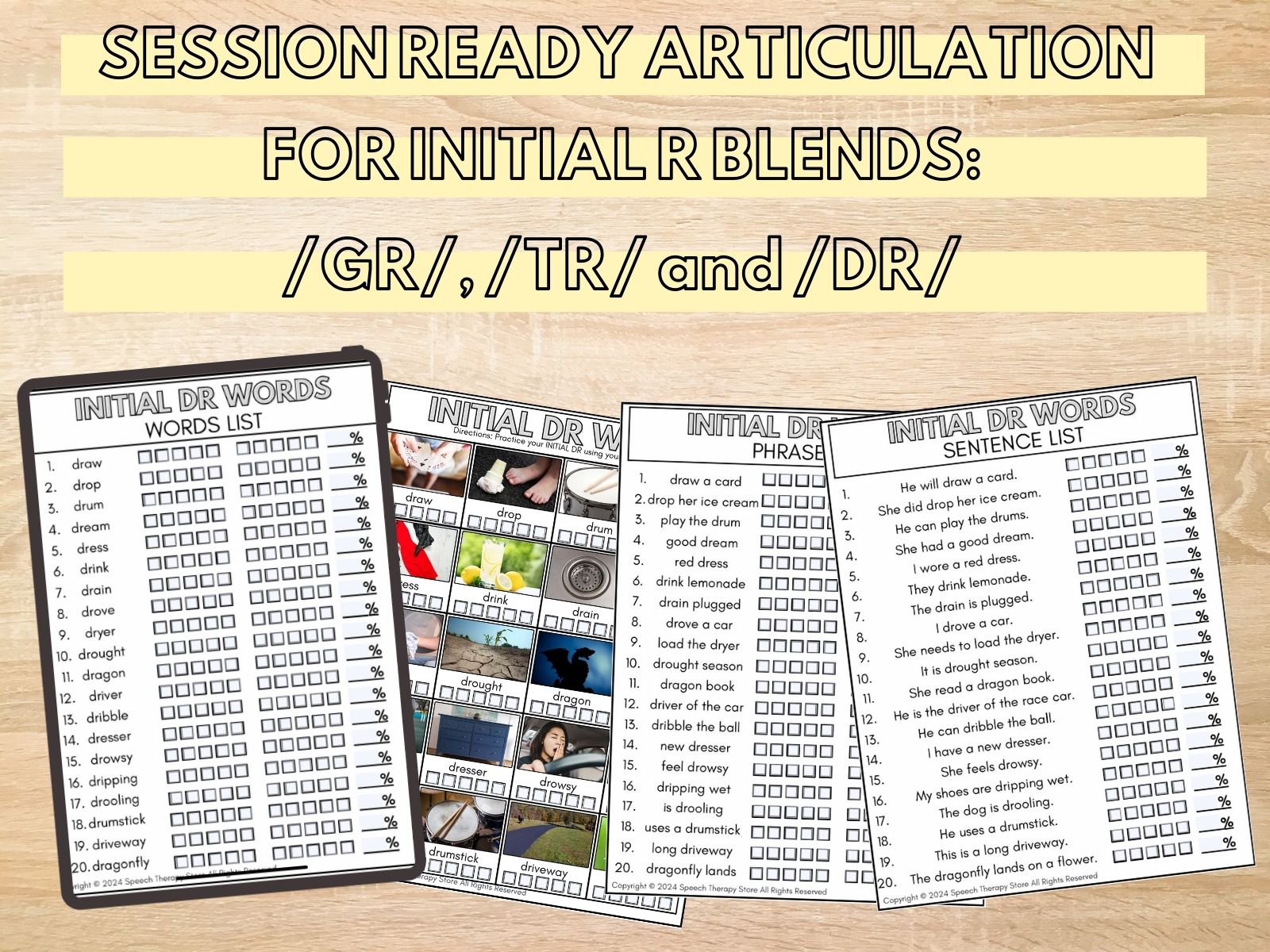
To make this practical, we’re sharing the full master set of our initial R-blend articulation freebies so you can see—and use—this structure right away.
These aren’t just word lists. Each R-blend sample includes:
- Visual supports paired with each word
- A clear, predictable format
- A built-in practice progression (word → phrase → sentence → conversation)
- Screen-ready, digital articulation materials you can use immediately
This is what session ready articulation looks like in action.
Download the Full Initial R-Blend Freebie Set Below
- TR initial R blends
- DR initial R blends
- GR initial R blends
Each freebie is designed to help you move from words to meaningful practice—without changing the format, re-explaining the task, or reinventing your session.
Make sure to download the R Blends below. Once you’ve looked through them, the five ideas below will click into place. Let’s dive in now!
1. Stop Treating the Word List as the Therapy
Articulation word lists are a starting point—not a session plan.
Most articulation therapy breaks down not because we don’t have the right words, but because:
- Sessions lack a consistent structure
- Materials change constantly
- Students don’t know what to expect
- Carryover stalls at the word level
- Prep time keeps piling up
Words alone don’t create progress.
Systems do.
If therapy feels scattered, the issue usually isn’t the target sound—it’s what happens next.
FOR YOU! All of these R Sound Activities were made in accordance with our Initial R, Medial R and Final R Lists! They are an amazing resource to add to your Speech Therapy ToolKit for carryover and minimal prep time requirements! Check out the R Articulation I Spy Game, our Master List of 43+ Effective and Free R Activities, this Prevocalic R Dot Game and Initial R Tic Tac Toe. Let us know which one is your favorite!

2. Use One Predictable Session Format
One of the biggest shifts SLPs can make is committing to one predictable articulation format.
Session-ready articulation means:
- The same layout every session
- Minimal explanation time
- Familiar routines for students
When every articulation session looks different, students spend more time adjusting to the task than actually practicing the sound. Over time, that inconsistency adds up—for both students and clinicians.
A predictable format reduces transitions, increases repetitions, and allows therapy time to be spent on production instead of setup. Check out the R Blend Materials below for one consistent format across your word lists!
Check It Out! You can download TR, DR and GR Initial R Blends for free below. Or you can get KR Initial R Blends, FR Initial R Blends, PR Initial R Blends and BR Initial R Blends right here!
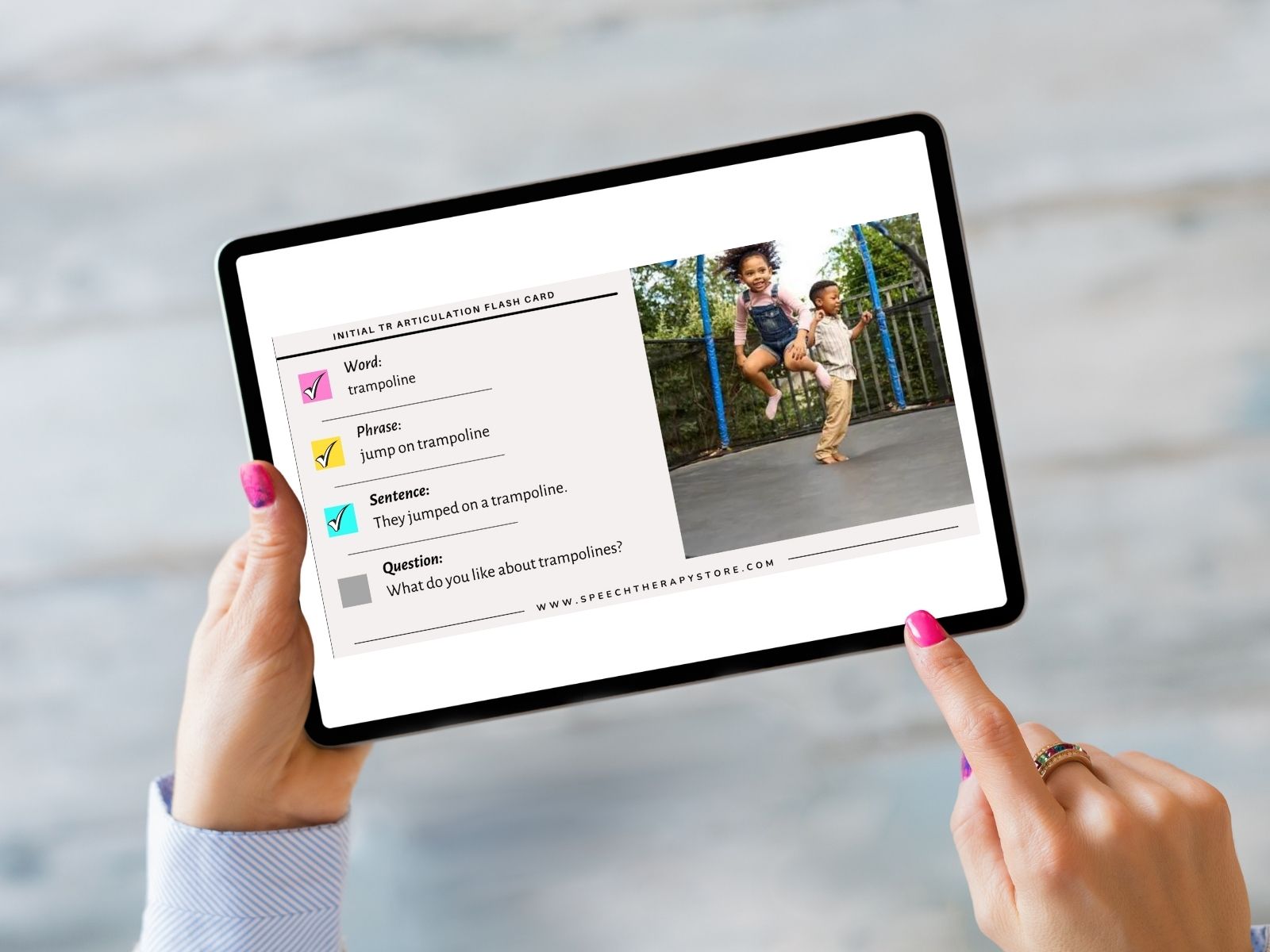
3. Pair Words With Clear Visual Supports
For many students—especially those working on complex targets like initial R blends—auditory models alone aren’t enough.
Consistent visual supports help:
- Anchor attention
- Reduce cognitive load
- Make practice feel more concrete
When students see the same image paired with the same word across sessions, they spend less energy decoding the task and more energy producing the sound.
This is where simple text-based word lists often fall short. Visual consistency matters—and it’s a key part of making articulation sessions truly session-ready.
This is also where Speech Therapy Store stands out! The Word Lists below use clear real life pictures for engagement and clarity.

4. Build in a Clear Practice Progression
Initial R blends are a perfect example of why structure matters.
Progress often:
- Looks solid at the word level
- Breaks down in phrases or sentences
- Falls apart in conversation
A session-ready articulation system removes unnecessary variables by keeping:
- The same word
- The same image
- The same layout
As students move from word → phrase → sentence → conversation, the task stays familiar. That familiarity supports carryover, because students can focus on the sound instead of learning a new activity every time.
Carryover doesn’t improve because we add more activities.
It improves when we remove the chaos.

5. Use Screen-Ready, Digital Articulation Materials
Articulation therapy today happens everywhere—therapy rooms, classrooms, teletherapy sessions, and shared screens.
That’s why screen-ready, digital articulation materials matter more than ever.
Digital articulation tools allow SLPs to:
- Screen-share instantly
- Use the same materials in person or online
- Reduce printing and prep
- Keep sessions consistent across settings
This isn’t about replacing clinical judgment—it’s about removing friction so therapy can run smoothly, no matter where it’s happening.
Session-Ready Articulation
The most effective articulation therapy doesn’t rely on constantly finding new word lists.
It relies on:
- One predictable format
- Clear visuals
- A built-in practice progression
- Materials that work anywhere
This same session-ready structure is used across the articulation resources inside the Speech Therapy Store Membership, so students don’t have to relearn the format every time a new sound is introduced—and SLPs don’t have to reinvent sessions month after month.
Because real articulation progress doesn’t come from more lists.
It comes from better systems.
Putting It All Together: Session-Ready Articulation in Action
Articulation progress doesn’t come from finding more word lists—it comes from using them inside a clear, repeatable system.
The initial R-blend samples in this post are designed to show what session-ready articulation looks like in practice. Each one uses:
- one predictable format
- clear visual supports
- a built-in practice progression from word to conversation
- screen-ready, digital materials that work across settings
That structure—not the size of the word list—is what supports carryover.
To help you try this approach right away, we’re sharing three initial R-blend articulation freebies you can download and use immediately:
- TR initial R blends
- DR initial R blends
- GR initial R blends
These samples let you experience how much smoother articulation sessions can feel when students recognize the format and know what comes next. For the full array of Initial R Blends, you can get KR Initial R Blends, FR Initial R Blends, PR Initial R Blends and BR Initial R Blends right here!

P.S. These word lists + flashcards use the same session-ready format as the articulation library inside the Speech Therapy Store Membership—word, phrase, sentence, and conversation with consistent visuals—so once students learn the routine, it sticks.
