We’ve spent two posts together on the research.
Then, what it looks like when a single evidence-based session actually puts that web to work.
But if you’ve run therapy for more than a week, there’s a question sitting underneath all of it. A fair one. Something like:
That’s lovely. But my group isn’t one student. It’s five, and they’re nowhere near the same place.
You’ve got a student ready for open-ended, independent work sitting next to a student who needs heavy cueing and visual support. One’s targeting narrative, one’s on vocabulary, one’s deep in morphology. And they all show up in the same twenty-five minutes.
This is the part that quietly breaks most “evidence-based” plans. The research assumes an ideal student. Your caseload sends you a real group. So this post is about the bridge between those two things, because a resource that only works for one kind of student was never going to survive your Tuesday.
Here’s how one theme reaches all of them.
Layer One: Every Resource, Three Ways
Start with the most concrete version of the problem. You want the whole group working on the same activity, but they can’t all do it at the same depth. Usually that means either the lesson is too hard for half of them or too easy for the other half. Someone gets left out.
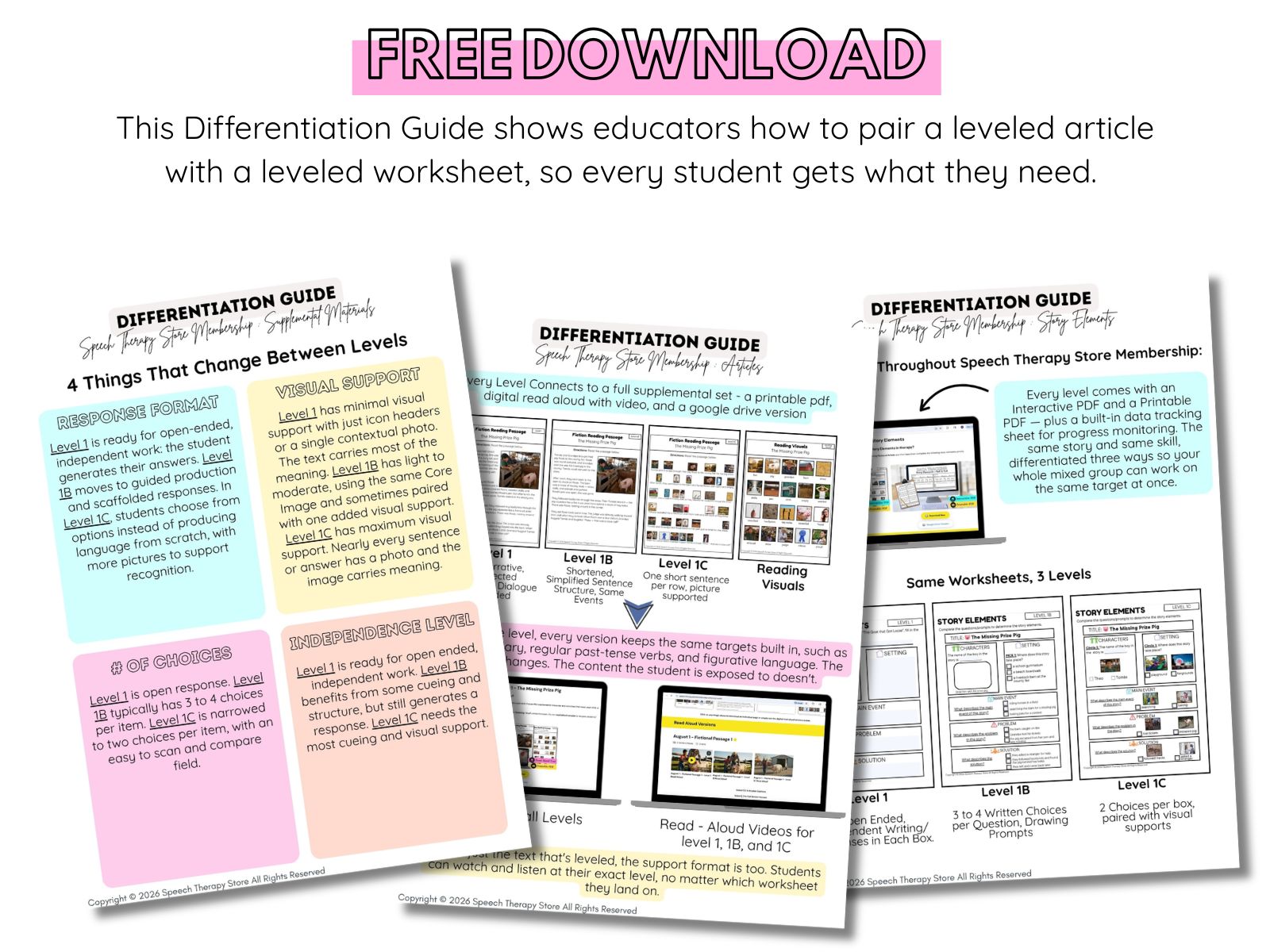
So every resource in the bundle comes at three levels of the same task.
For example, take a single vocabulary page. At Level 1, the student produces: they write the word, generate the beginning sound, describe the picture in their own words. At Level 1B, supports come in with multiple-choice options: they trace the word, choose the first sound from three or four options, fill in a blank with the word provided. At Level 1C, the supports increase even further: they recognize the word, pick the right meaning from two choices, point to the picture that matches. Each student lands on the level that fits them.
One word. Same skill. Same theme. Three genuinely different entry points.
What that buys you is a table where nobody is left out. The student working on open-ended production and the student who needs receptive picture-choice are doing the same activity, on the same word, at the same time. You’re not running three lessons. You’re running one lesson that meets three students exactly where they are. That’s the difference between differentiation as a nice idea and differentiation you can actually pull off during a session.
Layer Two: One Theme, Woven Together
Now the part that’s harder to see, and harder to build, and honestly the reason this works at all.
It would be easy to assume the theme is just decoration. A cute wrapper for your plans. Butterflies on everything this month, then apples next month. And plenty of resources out there are exactly like that: co-themed, but not connected. You can absolutely find a butterfly article and a butterfly vocabulary sheet from two different places. But the article won’t know anything about the vocabulary sheet, and the vocabulary sheet won’t know anything about the article. They just happen to share the same theme.
But that’s not what’s happening here. In the bundle, the pieces are built to reach into each other, just like the research says they should.
How the Connections Are Already Built
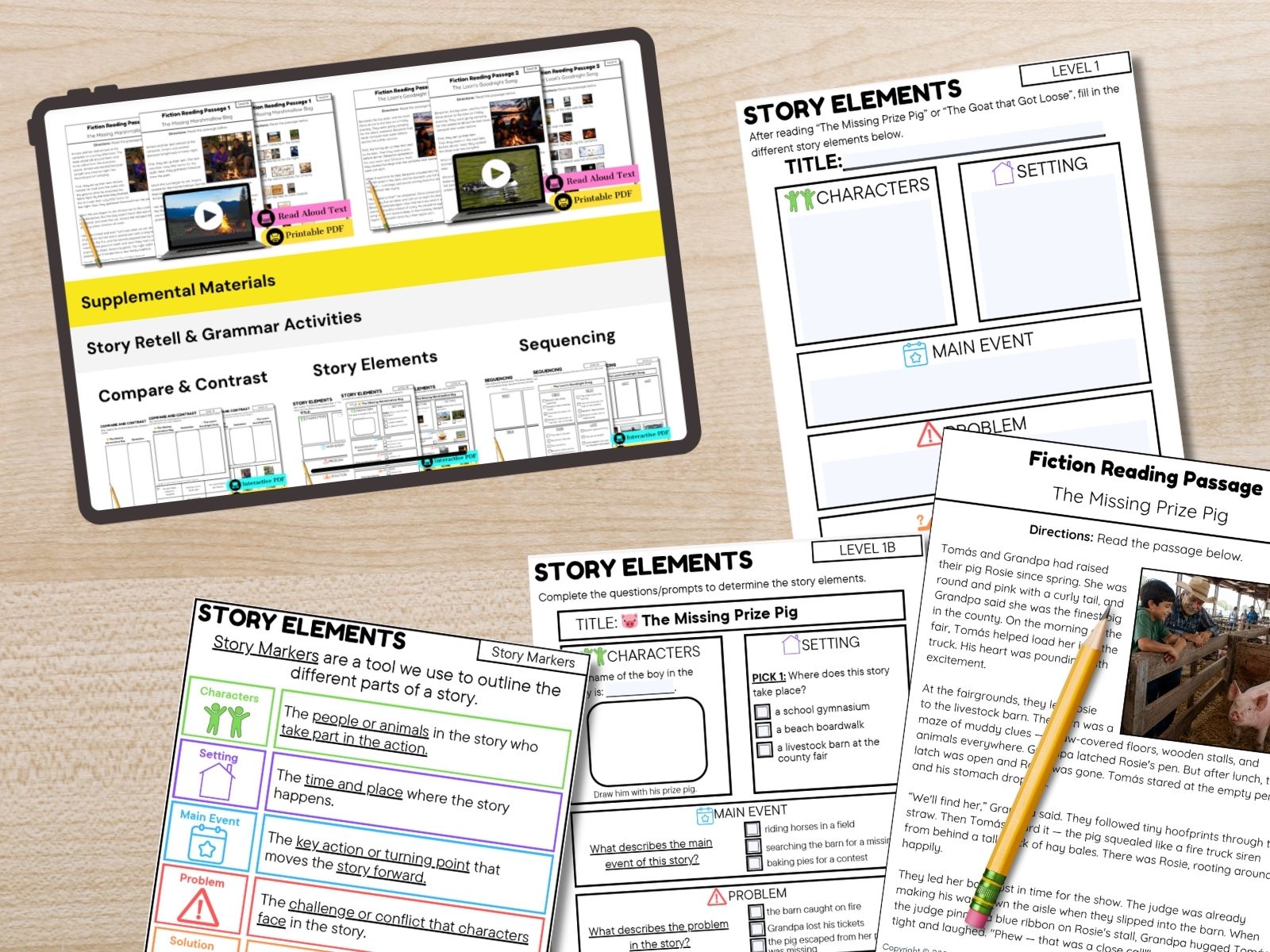
In practice, the Tier 2 vocabulary words live inside the nonfiction article. The making vocabulary connections practice, the comprehension questions, the narrative retell all pull from that same shared material. So when one student is working the nonfiction article and another is working the vocabulary page, they’re not just under the same banner. They’re hitting the same words from different directions. The retell reaches back for a vocabulary word that came from the article. The comprehension questions sit on the exact passage the vocabulary was pulled from.
Here’s why that matters for your mixed group. When five students are on five different goals, the connection between their work isn’t something you have to build. It’s already there. The student on vocabulary is quietly reinforcing the student on comprehension, because they’re inside the same connected content. The theme isn’t holding the group together on the surface. The web of research is holding it together underneath.
And that web is the invisible labor. It’s the part you’d normally do by hand at nine o’clock at night, trying to make the article you found actually match the vocabulary you found so the session hangs together.
Here, the alignment is the product. Five goals, one connected world, and none of the stitching left on you.
That’s exactly what the Speech Therapy Store Membership is built to do.
The skills connect. You can see it in one session. And that connection is exactly what lets a room full of different students work at the same table.
A Year Already Planned: What’s Inside the Speech Therapy Store Membership
If one theme can do that, the next honest question is: how often do I have to build it?
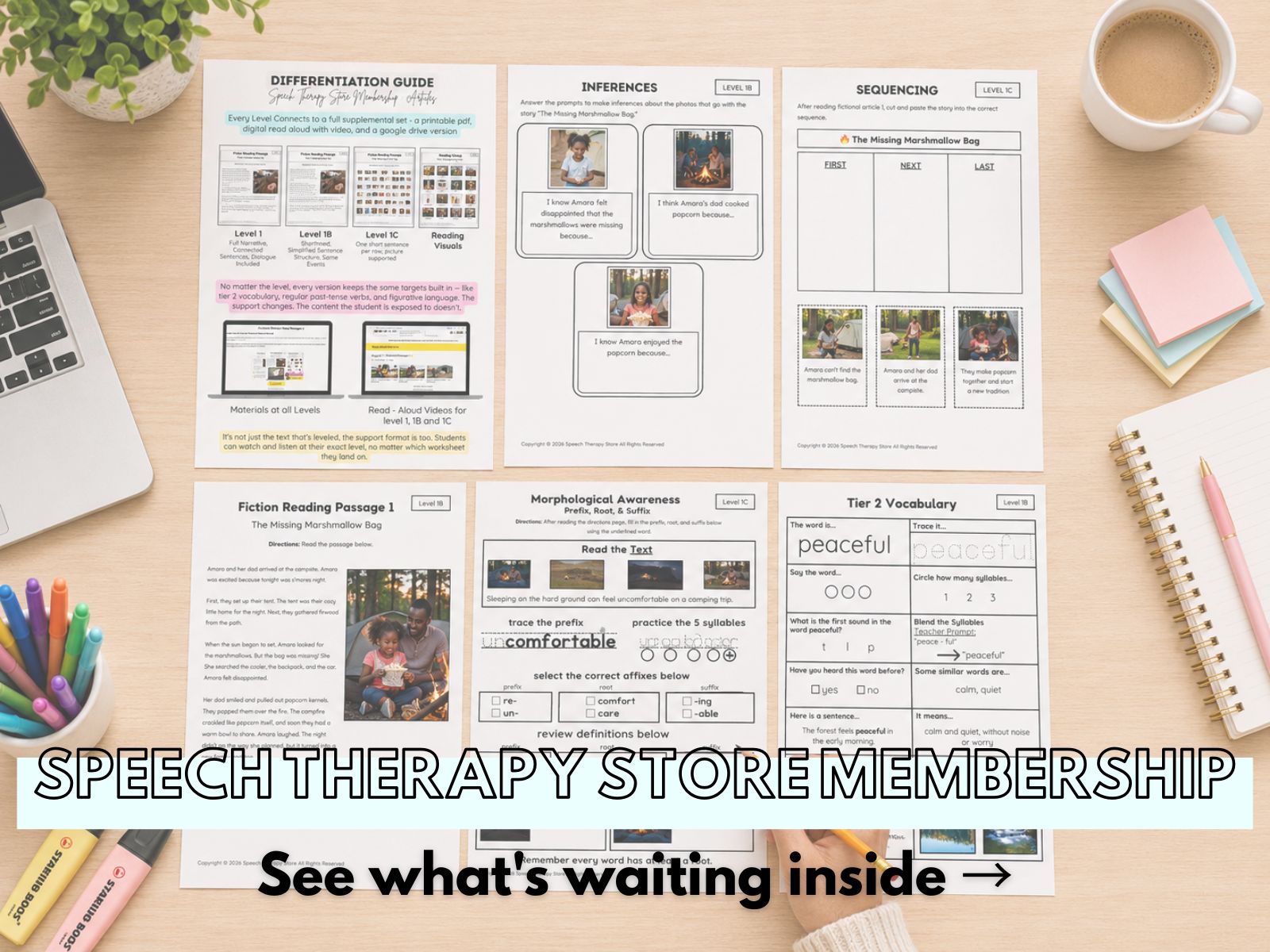
You don’t. The Speech Therapy Store Membership ran eleven full themed bundles this past year, September through July, each one built this same way: leveled three ways, woven together, ready to use. Not a stack of worksheets. A connected year.
And the year ahead is already mapped out, from the County Fair bundle that kicks off August, to The Snowy Express in December, to the Jungle in May, and every month in between. The whole lineup is done and dated, so you always know what’s coming and you never start a week from a blank page.
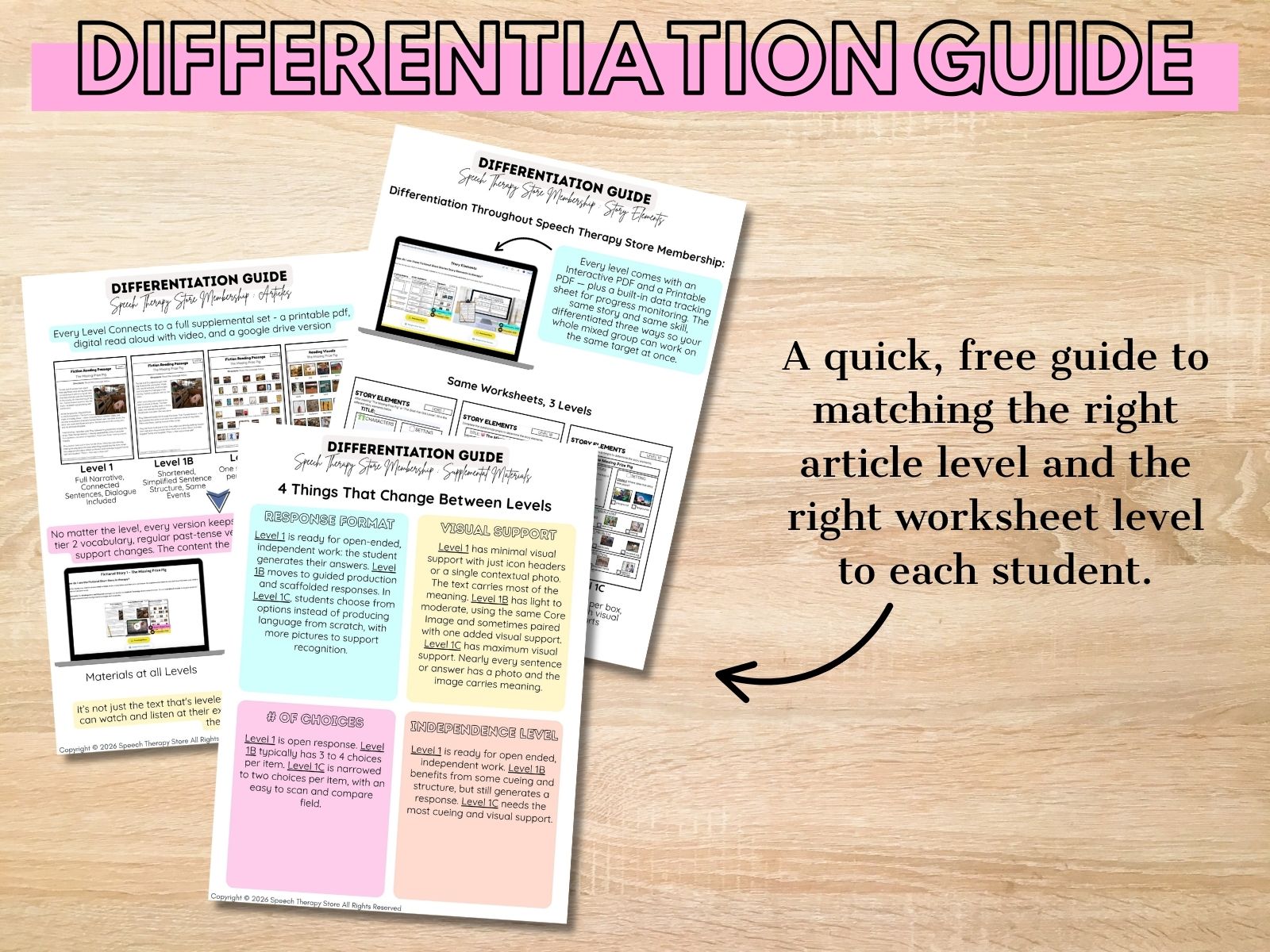
I put the entire year on one page so you can see it at a glance. That, plus a quick guide to how the leveling works, is waiting for you right here:
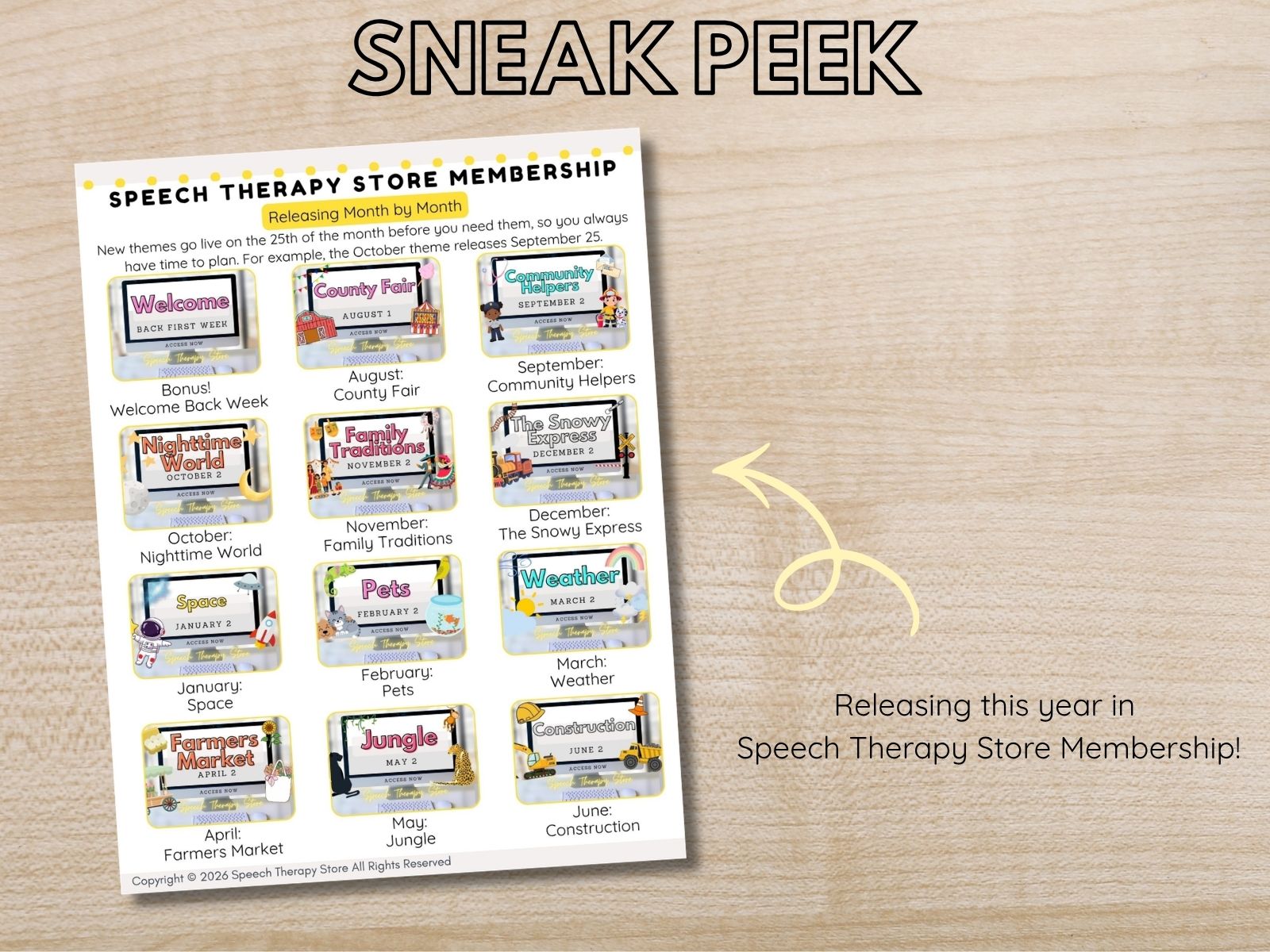
Inside you’ll get the differentiation guide (one skill shown at all three levels, so you can see exactly how a single activity reaches your whole group) and the full 2026/27 theme calendar with release dates.
One More Thing
Here’s the timing, and it’s the reason I’m telling you all of this now.
Monday, we kick off our biggest week of the year. All week long we’re rolling out what’s new for the year ahead, and it’s the one week the Welcome Back bundle is on the table. When it starts, everything in these three posts stops being something to read about and becomes something you can use that afternoon: the research, the connected sessions, the leveling, the whole planned year.
Everything we’ve covered in these three posts is already built and waiting inside the Speech Therapy Store Membership.
I’ll be back Monday morning to kick it all off. Grab the guide above so you’re ready, and I’ll see you then.