Why Categories Matter for Language and Comprehension
When we think about vocabulary in speech therapy, it’s easy to focus on teaching individual words—but language doesn’t actually work that way.
Words are stored in the brain as part of a larger system—often referred to as a semantic network—where words are connected based on meaning, relationships, and experiences. (Check out more details and the research on Building Semantic Networks in Speech Therapy HERE!)
When these connections are strong, students are better able to:
- understand what they hear and read
- recall and use vocabulary
- explain their thinking
- and make connections across ideas
This is where categories in speech therapy become so important.
Categories help students organize words by meaning, strengthening the connections within their semantic network. Instead of learning words in isolation, students begin to understand how vocabulary fits together—and that’s what leads to stronger language and comprehension.
We are so excited for you to grab the free materials that will help you teach and practice categories in speech therapy! Download them below!
Check This Out! We recently did a deep dive on the research behind Building Semantic Networks and the importance of linking categories and vocabulary. We created an easy to read Key Findings Poster for you to reference that covers what the Evidence Based Research says!
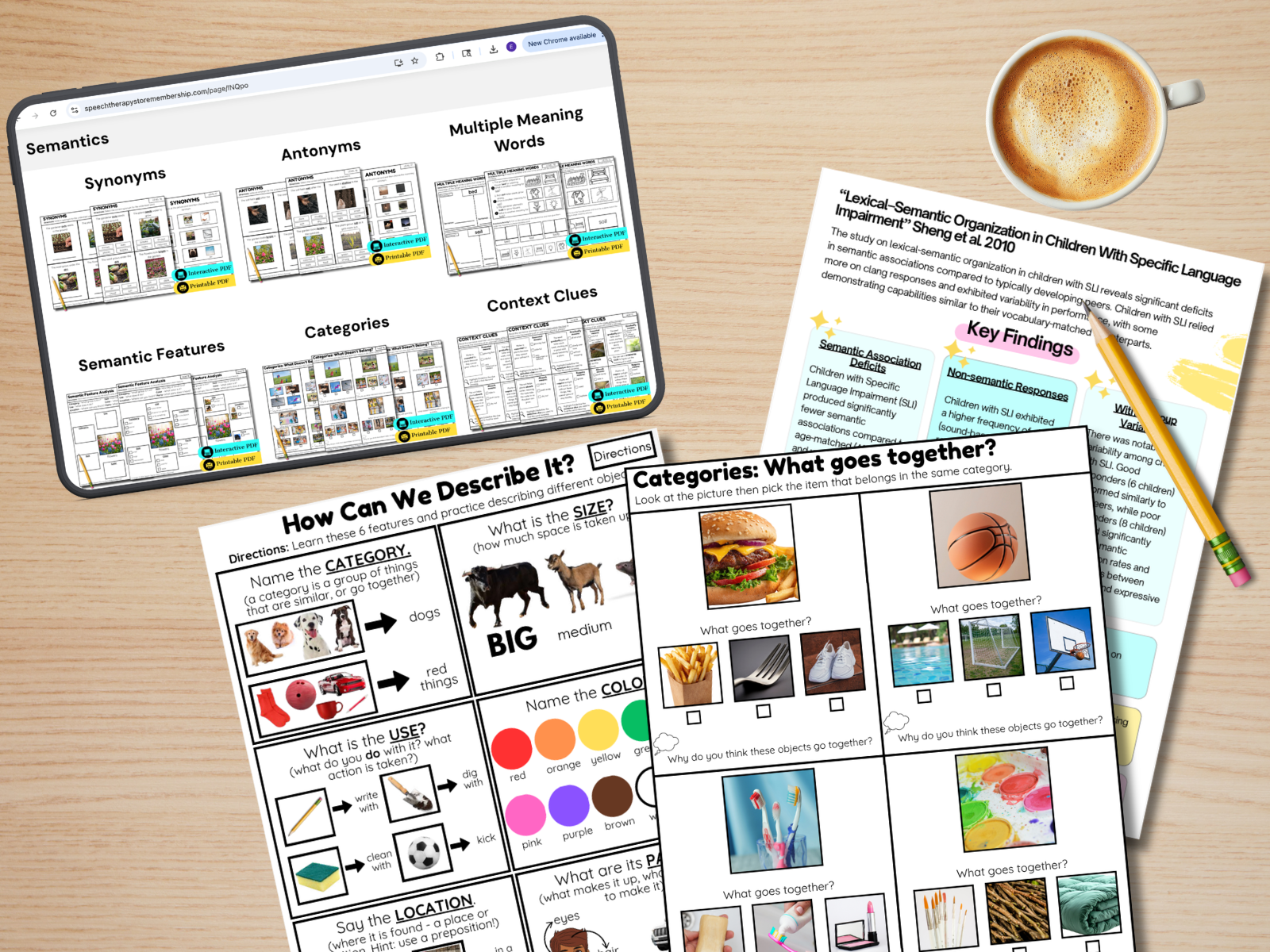
Why Semantic Organization Supports Comprehension
At its core, comprehension depends on how well students can connect and organize information in the mind. The more meaningful the connections between words, the easier it becomes for students to understand what they hear, read, and say.
When words are well organized in the brain:
- students can access them more quickly
- they understand relationships between ideas
- and they can build meaning more easily
When words are not well organized:
- comprehension breaks down
- word retrieval becomes difficult
- and language feels disconnected
👉 Simply put:
Better semantic organization leads to better comprehension.
Building Semantic Networks Through Categories
So how do we actually help students build stronger semantic organization?
The answer is categorization.
Categorization is one of the most powerful tools in speech therapy because it helps students group words based on meaning—not surface-level features like sound.
Instead of focusing only on individual vocabulary words, category speech therapy allows students to:
- see relationships between words
- organize vocabulary more efficiently
- and build stronger, more flexible semantic networks
This shift—from teaching isolated words to teaching connected meaning—is what leads to lasting language growth.
FOR YOU! We have a couple of great, free resources to get started on categories today! Check out our Master List of 35+ Free Activities to Teach Categories in Speech Therapy. We also have a Master List of Category Ideas for when you feel stuck – Download 133+ Categories List for Speech Therapy!
How to Teach Categories in Speech Therapy
Once we understand the importance of categories, the next step is knowing how to teach them in a structured, effective way.
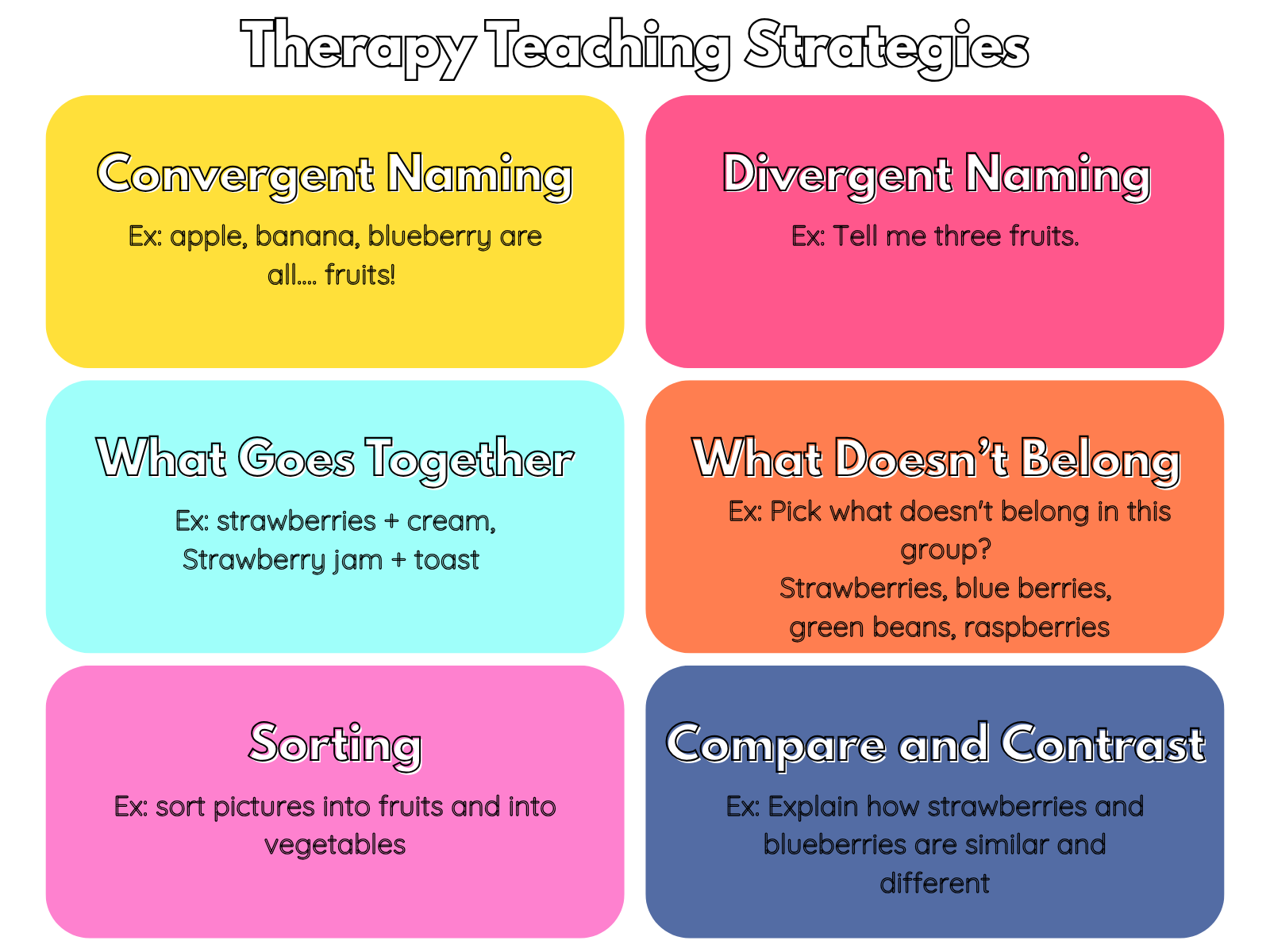
These therapy strategies help students actively build connections between words:
🔹 Convergent Naming
Students are given items and asked to identify the category.
Example:
“A beach ball, a bucket, and a shovel are all… beach toys.”
👉 This builds category recognition and understanding of shared meaning.
🔹 Divergent Naming
Students are asked to generate items within a category.
Example:
“Tell me 3 fruits.”
👉 This strengthens vocabulary retrieval and organization.
🔹 What Goes Together
Students identify items that are related and explain why.
👉 This builds connections between words and supports reasoning skills.
🔹 What Doesn’t Belong
Students identify the item that does not fit within a group.
👉 This strengthens flexible thinking and deeper category understanding.
🔹 Sorting Tasks
Students sort words or pictures into categories.
👉 This builds foundational categorization skills and organization.
🔹 Compare and Contrast
Students explain how items are the same and different.
👉 This strengthens semantic relationships and deeper understanding of vocabulary.
🧠 What Are You Teaching? (Types of Categories in Speech Therapy)
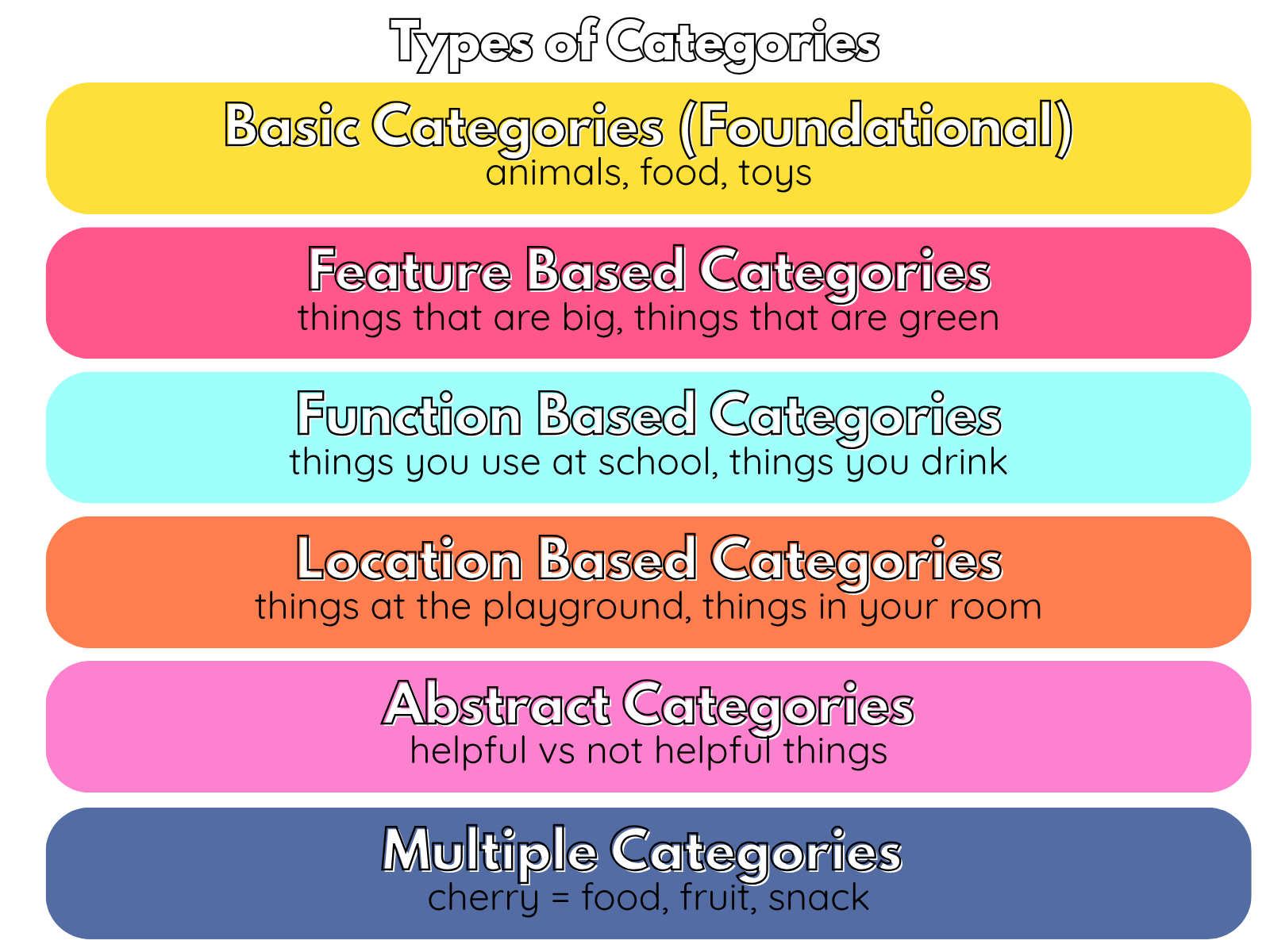
While these strategies show us how to teach categories, it’s also important to understand what types of category relationships students need to learn.
These build from simple to more complex:
🟡 Basic Categories (Foundational)
- animals
- food
- toys
👉 Early learners begin by grouping familiar items into simple categories.
🔵 Feature-Based Categories
- things that are cold
- things that are soft
- things that are big
👉 Students learn to describe and group items based on attributes.
🟢 Function-Based Categories
- things you eat
- things you use to clean
- things you use at school
👉 This builds understanding of how objects are used in real life.
🟠 Location-Based Categories
- things at the beach
- things in a kitchen
- things at school
👉 This strengthens contextual understanding and vocabulary connections.
🔴 Abstract Categories (Higher-Level)
- things that are helpful vs. harmful
- things that are important vs. not important
👉 This supports inferencing and higher-level language skills.
🟣 Multiple Category Membership
- apple = fruit, food, snack
👉 Students learn that words can belong to more than one category, building flexible thinking and stronger semantic networks.
P.S. Grab our Free 141+ Page Categories for Concentration Game for Free Right Here! Or grab this fun, Animal Themed Categories Activity!

🧩 What This Looks Like in Speech Therapy
Building semantic organization through category speech therapy isn’t about teaching isolated vocabulary words—it’s about helping students interact with words in multiple meaningful ways.
For example, within the Speech Therapy Store Membership, students engage with a nonfiction article that is rich in Tier 2 vocabulary.
From there, they practice a wide range of semantic skills, including:
- synonyms and antonyms
- multiple meaning words
- semantic features and describing
- categorization and word relationships
- context clues
- following directions and basic concepts
Because all of these activities are connected back to the same vocabulary and themes, students aren’t just learning words—they are building connections within their semantic networks.
This kind of repeated, meaningful exposure is what leads to:
- stronger vocabulary
- improved word retrieval
- and deeper comprehension
Learn More About Everything the Membership has to offer!
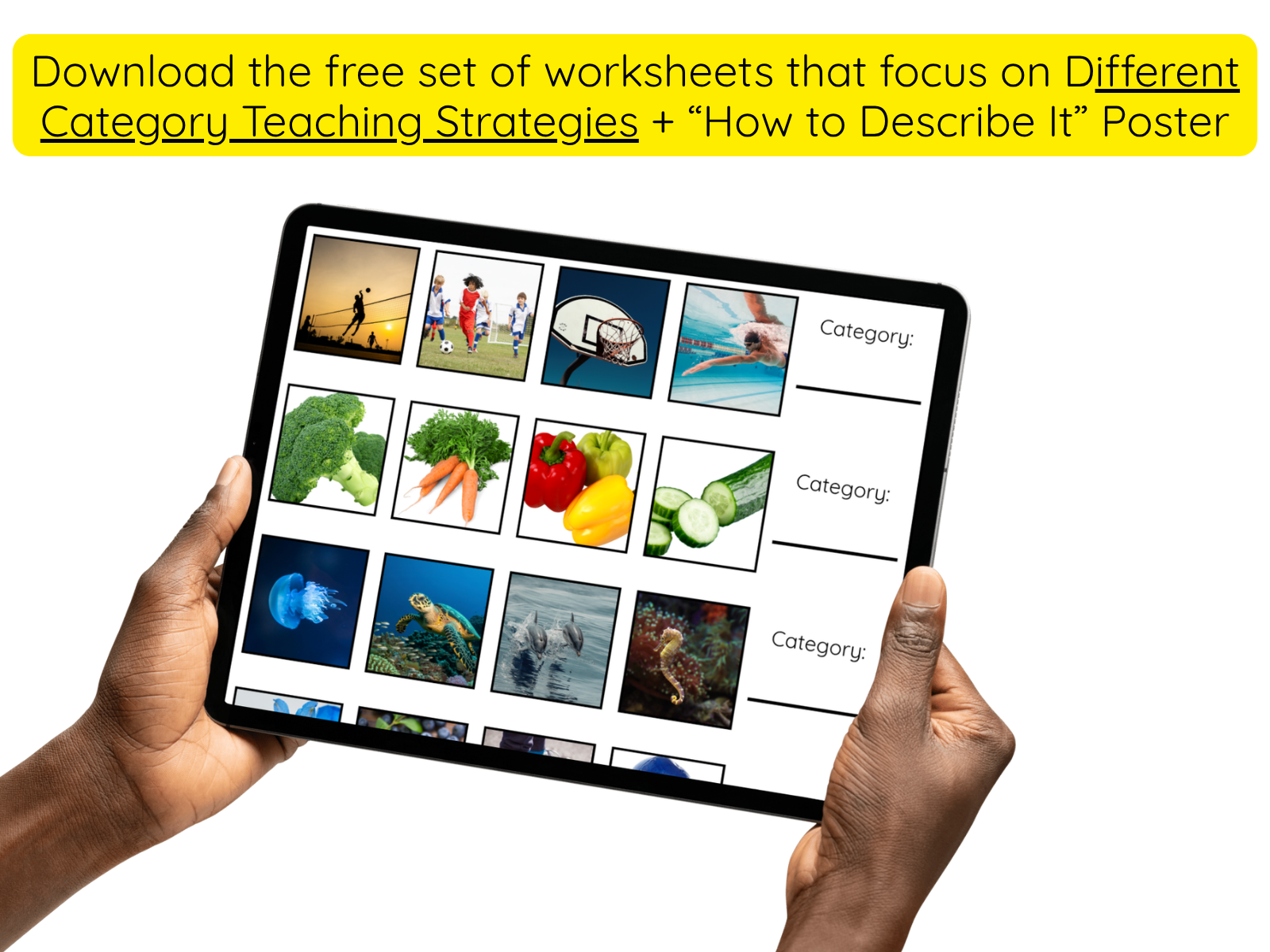
Final Takeaway + Free Download
When students struggle with vocabulary, the issue is rarely just about the words themselves—it’s about how those words are connected in the mind.
That’s the real power of teaching categories in speech therapy. By helping students group, compare, and organize vocabulary, you’re giving them the mental scaffolding to retrieve words faster, understand new concepts more deeply, and comprehend what they read and hear with greater confidence. It’s a small instructional shift with a big payoff—stronger language now, and more confident communicators down the road.
Ready to put it into practice? Grab the free worksheets below and try one strategy with a student this week.
The Best Speech Therapy Language Bundles You have Ever Found
We didn’t want to miss the chance to highlight these incredible language bundles! These are designed to be a grab and go resource for the days when you have multiple goals to hit, with multiple students, in one quick question and are just feeling frazzled. These bundles stick to a general theme (Back to School, Winter, Valentines Day, Spring Etc) and are completely digitally interactive (hello tele-therapists!) and have real life pictures!